


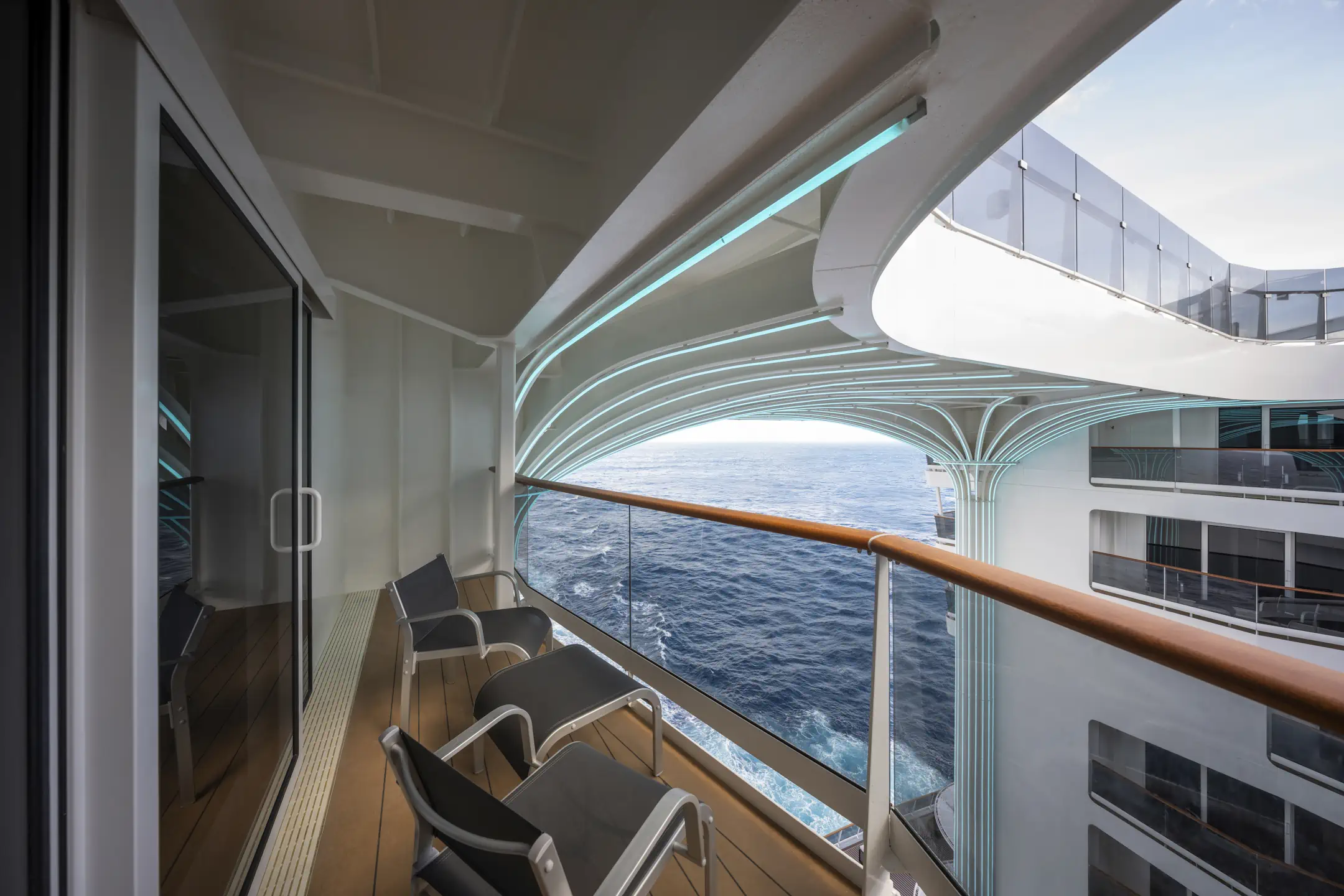
MSC Cruises is expanding its World Class fleet once again, confirming an order for two additional mega ships with the French shipbuilder Chantiers de l’Atlantique. The announcement, made this week at the shipyard in Saint-Nazaire, France, coincided with another milestone — the float-out of MSC World Asia, the next vessel in the series.
The newbuilds will be delivered in 2030 and 2031, extending MSC’s partnership with Chantiers de l’Atlantique and marking a significant investment in the line’s next-generation fleet. Together, the two ships are valued at around €3.5 billion ($3.8 billion USD), signaling MSC’s confidence in the continued global growth of the cruise market.
A Growing World-Class Fleet
The two new ships, informally known as World Class 7 and World Class 8, will follow in the footsteps of MSC World Europa (2022), MSC World America (2025), and MSC World Asia (2026). Like their predecessors, the new vessels will be built on MSC’s massive World Class platform, each capable of carrying more than 6,700 passengers and over 2,000 crew.
While official names and itineraries haven’t yet been revealed, the ships are expected to feature similar layouts to World Europa and World America, with the signature World Promenade, indoor-outdoor dining concepts, and next-generation environmental technology.
Sustainability and Shipbuilding Innovation
One of the most interesting aspects of this order is MSC’s continued focus on energy efficiency and emissions reduction. The line has made no secret of its goal to achieve net-zero emissions by 2050, and the World Class platform is a cornerstone of that strategy.
Both new ships will use liquefied natural gas (LNG) as their primary fuel — with the flexibility to adopt newer, cleaner fuels as technology advances. According to MSC, each successive ship in the class has improved its energy efficiency by roughly 5–10% over the previous design.
The new vessels will also incorporate advanced systems for heat recovery, smart ventilation, and optimized hull design, along with shore power connectivity to allow for zero-emission operation while docked in ports equipped with the infrastructure.
In a statement, MSC Group’s Executive Chairman Pierfrancesco Vago said the company remains “committed to investing in cleaner, more efficient ships that push the boundaries of sustainable cruising.” He added that the continued collaboration with Chantiers de l’Atlantique “helps drive innovation not only for MSC but for the entire cruise industry.”
A Strategic Signal: MSC Isn’t Slowing Down
For cruisers, this order sends a clear message — MSC is betting big on long-term growth and a global footprint.
Even as the cruise industry adjusts to post-pandemic realities and rising construction costs, MSC is expanding faster than nearly any other brand. These new orders solidify the company’s position as the third-largest cruise line in the world, behind Carnival Corporation and Royal Caribbean Group.
The move also suggests MSC’s intention to keep building on its U.S. expansion, which now includes homeports in Miami, Port Canaveral, and Galveston, with MSC World America debuting from Miami in 2025. The future World Class ships could easily follow similar itineraries, offering both Caribbean and European deployment opportunities depending on market demand.
What Passengers Can Expect
While MSC hasn’t revealed details for the upcoming ships, cruisers can expect several familiar — and upgraded — features based on recent design trends:
- Next-gen environmental systems: improved LNG and hybrid propulsion, with readiness for bio-LNG or methanol.
- Expanded dining and entertainment zones: likely building on the popular two-deck World Promenade found on World Europa and World America.
- High-tech guest experience: MSC’s “MSC for Me” app ecosystem continues to evolve with more personalized service and AI-driven efficiency.
- Family and resort-style amenities: MSC is expected to continue catering to multigenerational travelers with expanded kids’ clubs, water parks, and lounge space.
If World Europa set the bar for MSC’s futuristic design, these new ships could represent the next step in blending large-scale cruising with advanced sustainability.
Why This Matters for Cruisers
For travelers, this announcement isn’t just about new ships — it’s about what kind of experience MSC is building for the next decade.
- More Ship Choices: The continued expansion gives passengers more variety across itineraries, regions, and ship styles.
- More Competitive Pricing: As capacity increases, fares often stay competitive — good news for cruisers hunting deals on newer ships.
- Better Environmental Performance: The addition of more LNG-powered ships means cleaner operation and quieter sailing, which frequent cruisers will notice.
- Stronger North American Presence: With MSC World America debuting strong, these future ships could easily extend MSC’s year-round Caribbean network.
Looking Ahead
Between World Asia’s float-out and the new orders, 2025 has been a banner year for MSC’s shipbuilding strategy. The company is currently operating more than 22 ships worldwide, with several additional vessels under construction across multiple classes.
The long lead time to 2030–2031 may seem distant, but in shipbuilding terms, it’s right on schedule — and it underscores MSC’s commitment to steady, sustainable growth.
For cruisers, the takeaway is simple: MSC isn’t slowing down. Expect bigger ships, greener technology, and more global reach in the years ahead.


