
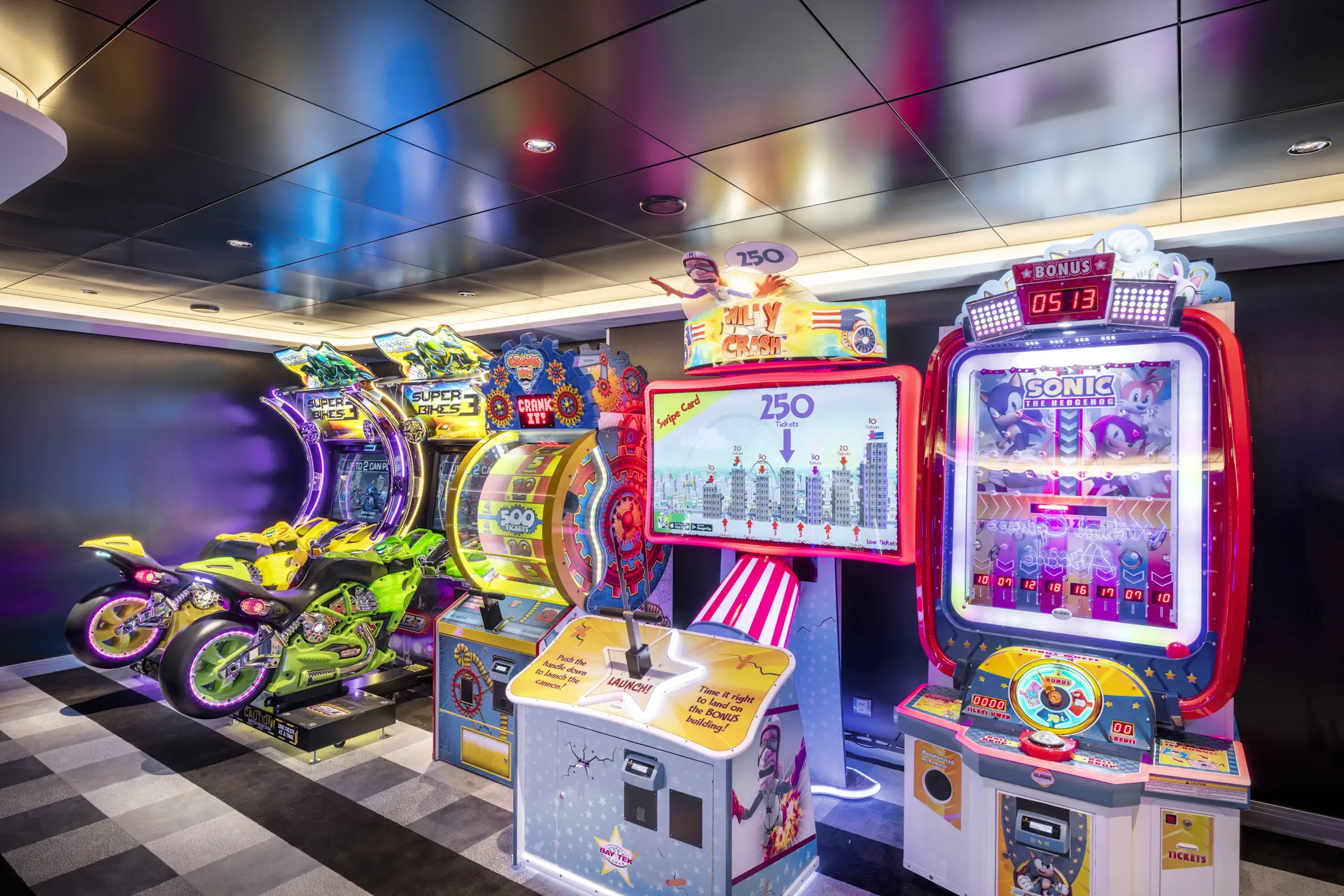
MSC’s arcade scene has come a long way from the “small room with a few cabinets” vibe you might remember from older cruise ships. On many ships today, the arcade is part of a bigger paid-entertainment district – the place where you’ll find everything from quick-hit redemption games to premium experiences like racing simulators, VR arenas, bowling, and (on a few ships) headline-grabbing thrill rides.
If you’re cruising with kids or teens, the arcade can become a daily ritual. If you’re cruising without them, it’s still worth a look because some of MSC’s most unique “only-on-a-ship” experiences live in or near this area.
Here’s what to expect, what it costs, and how to keep it fun without accidentally turning your cruise card into a blank check.
What MSC’s “Arcade” really includes
Depending on ship and class, you’ll see a mix of three tiers.
The standard arcade tier
This is the classic stuff:
- Racing games, shooters, sports games, dance rhythm games
- Quick reaction games and competitive two-player setups
- Plenty of “tap, play, done” machines that cost a couple bucks per session
Skill and redemption games
This is the “kids gravitate here immediately” category:
- Skee-ball style lanes, basketball toss, air hockey (varies by ship)
- Ticket or points redemption systems where you build up winnings and trade them in for prizes
- A heavy presence of claw machines and games of chance on many ships
One honest heads-up: claw machines and chance-based games can burn credits fast. They’re fun, but they are also the easiest way to watch your Fun Pass balance disappear in 15 minutes.
The “thrill” tier
This is where MSC starts feeling like a theme park at sea:
- Formula 1 style racing simulators
- VR stations or arena-style VR experiences (often short, intense sessions)
- 4D or interactive cinema experiences on some ships
- Bowling on ships that offer it
On some of the newest ships, MSC also manages major thrill rides within this same paid “amusement” ecosystem. They may not be physically inside the arcade room, but they operate like an extension of it.
Card vs token systems: how you pay
MSC has largely moved to an all-digital model.
No tokens, no cash
You typically activate games by swiping or tapping:
- Your cruise card, or
- A wearable wristband where available
Charges are either billed directly to your onboard account or deducted from Fun Pass credits if you’ve purchased a pass. MSC’s own Fun Pass info describes it as credits used in the amusement area, linked to one guest account but usable by the family. When credits run out, remaining play charges your onboard account.
The “Fun Pass advantage”
Here’s the simple version: if your group is going to play a lot, the Fun Pass is usually the only way to bring the effective per-play cost down.
Guests commonly report deals like “pay $80, get $140 in credit” depending on ship and sailing. That bonus credit is where the value comes from. Pay-as-you-go is convenient, but it is usually the most expensive way to play if you’re swiping all week.
Sharing credits
In practice, families often keep the Fun Pass on one person’s card and use that card for everyone’s play. It keeps spending predictable, and it prevents the “every kid is swiping independently” situation that leads to surprise charges.
Typical price ranges
Pricing varies by ship, itinerary, and sometimes currency, but these ranges are a helpful planning baseline.
| Category | Typical range you’ll see |
|---|---|
| Standard arcade games | About $1.50 to $3.00 per play |
| Redemption and claw games | Often $2.00 to $5.00 per play, depending on machine |
| VR and premium simulators | Often around $11.00 to $15.00 per session |
| Bowling | About $25 for 30 minutes or $45+ per lane per hour, plus shoe fees on some ships |
| Big thrill rides on select ships | Commonly in the $10 to $12 range per ride |
If you’re writing this for the site, a smart way to frame it is: “expect standard games to feel like a normal arcade, but premium experiences price more like attractions.”
Who the arcade is really for
Kids (12 and under)
This group loves:
- Claw machines and redemption games
- Simple quick-play games
- Air hockey and interactive games when available
They also burn through credits the fastest, mostly because the “one more try” factor is undefeated.
Teens (12–17)
This is the arcade’s core audience on most sailings. It’s social, it’s loud, and it’s one of the easiest places for teens to naturally gather without needing a structured activity.
Important nuance: MSC teen clubs sometimes run free console tournaments in their lounge spaces, but the paid arcade machines nearby still require swipes.
Adults
Most adults fall into one of two categories:
- “Try it once” cruisers who do F1 or VR for the novelty
- Competitive types who end up doing repeat sessions because they need redemption after a terrible first lap
If you are cruising as a couple, it’s also a great after-dinner option when you want something fun that is not a show, casino, or bar.
Crowd patterns: when it’s busy and when it’s not
If you only take one tip from this article, make it this: timing matters.
Peak times
- Sea days from about 10:00 AM to 4:00 PM
- After dinner and into late evening, especially once kids’ programming winds down
Expect noise, crowds, and some lines for premium attractions.
The “dinner dip” (best-kept secret)
The arcade is often quietest between roughly 6:00 PM and 8:30 PM while families are at dinner.
If you want to try F1, VR, or anything premium without standing behind a pack of teenagers, this is your window.
Port day strategy
Port days are typically calm onboard, especially when most guests are ashore. If your group is staying on the ship for a port call, you can often get easy access to machines and premium attractions with little to no wait.
Some cruisers also report occasional unadvertised promos or multi-ride deals during quieter periods, but don’t count on it. Think of it as a happy surprise, not a plan.
What to expect in real life (the honest version)
- The arcade is loud and bright. It’s designed for energy, not relaxation.
- Premium attractions can have lines. F1 and VR are the usual bottlenecks.
- Machines can occasionally glitch or fail to register a swipe. If something feels off, talk to staff right away rather than shrugging it off and swiping again.
- Redemption prize value can feel steep. It’s fun, but set expectations. You are not funding a college education with skee-ball tickets.
How to avoid overspending
Decide your “arcade budget” before the first swipe
Arcades are famous for turning small decisions into big totals. The easiest fix is agreeing on a budget upfront.
Consider the Fun Pass if you have teens
If your group includes teens who love arcades and simulators, the Fun Pass is often the cleanest way to control spending and get bonus value.
Treat claw machines as dessert, not dinner
They’re fun, but they can eat credits quickly. A simple rule like “one claw attempt per day” saves a lot of regret.
Use timing to your advantage
If you hit the arcade during the dinner dip or on port days, you’ll spend less time waiting and more time actually playing. That matters because premium sessions are short, and nobody wants to pay attraction pricing just to stand in line.
Bottom line
MSC arcades can be a blast, especially on sea days or when you want a fun after-dinner option that doesn’t involve a schedule or a reservation. Just remember what MSC is really offering here: a mix of inexpensive quick-play machines and premium, attraction-style experiences that can add up fast.
If your group is going to dabble, pay as you go and keep it simple. If your group is going to go hard (especially with teens), the Fun Pass is usually the smartest way to turn “constant swiping” into a predictable budget with bonus value.